Construction · Formwork
Film-Faced Shuttering Plywood
Two film-faced sheets can look the same in the yard and perform very differently on site. Here is how to compare film, core and edges, how to work out cost per pour, and how to get more pours from every sheet.
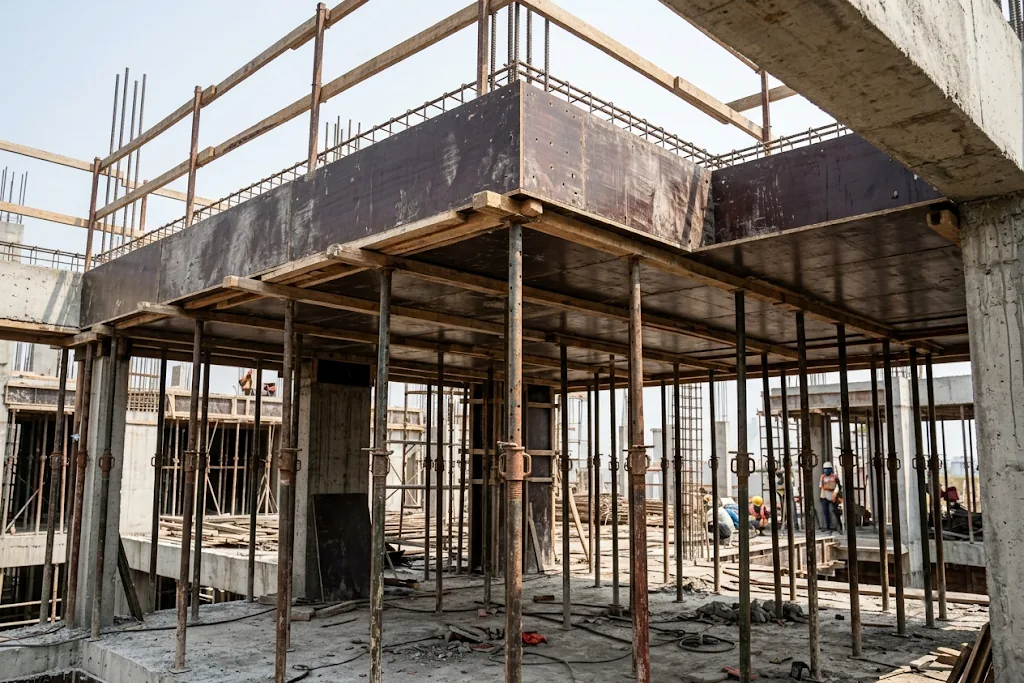
For Contractors: What Separates One Film-Faced Sheet From Another
Film-faced plywood is waterproof plywood with a phenolic film pressed onto both faces, so wet concrete doesn't stick and the panel strips cleanly. Our shuttering plywood overview covers what it is and how it differs from furniture BWP. This page is the next step: how to compare film-faced sheets on what actually decides your cost, which is how many clean pours you get from each sheet.
Two sheets that look identical in the yard can give very different results on site. The difference is in the film, the core, the glue and the edges.
What to Compare on Film-Faced Plywood
| Spec | What it means | What to look for |
|---|---|---|
| Film weight | Weight of phenolic film per sq metre; commonly quoted in g/m² (gsm) | Heavier film lasts more pours and gives a smoother concrete face |
| Film finish | Regular film vs "mirror finish" (very smooth, glossy) | Mirror finish for exposed or fair-faced concrete; regular for plastered work |
| Core | Hardwood vs lighter species | Hardwood cores resist nail damage and bending; check for gaps and overlaps |
| Glue | Phenolic (BWP) bond between plies | Must be fully waterproof; boil-test an offcut if unsure |
| Thickness | Usually 12, 15 or 18 mm | 18 mm for slabs and heavy pours; check thickness at several points |
| Edges | Painted or sealed edges | Sealed edges stop water entering, the usual cause of early failure |
Price per Pour, Not Price per Sheet
The cheapest sheet is rarely the cheapest formwork. What matters is cost per casting cycle: sheet price divided by the number of good pours it gives. As an illustration, a sheet costing ₹2,400 that gives 6 clean pours costs ₹400 per pour; a sheet costing ₹3,000 that gives 12 pours costs ₹250 per pour, and gives a better concrete finish on every one of them. Add the labour saved on plastering when the concrete face is smooth, and the better sheet wins easily.
Typical reuse quoted for good shuttering plywood is in the region of 8–15 or more cycles, depending on film, core, handling and how well it is cleaned and oiled between pours. Track your own numbers on site: they are the best guide for the next purchase.
Getting the Most Pours From Every Sheet
Before the pour
Release agent every time
A thin, even coat protects the film and makes stripping easy.
Cutting
Seal every cut edge
Paint or seal fresh cuts the same day; raw edges soak up water and swell.
Fixing
Nail from the back where possible
Fewer holes in the film means a cleaner face and longer life.
Stripping
Don't lever on the edges
Edge damage ends more sheets than face wear does.
After the pour
Clean before it hardens
Scrape soft concrete off the film with a plastic scraper, not a steel bar.
Storage
Flat, covered, off the ground
Stack on battens, film faces together, under cover from sun and rain.
Buying Checklist
1. Thickness measured at four corners and the centre. 2. Film even, with no bubbles, peeling or bare patches. 3. Edges sealed. 4. Core free of large gaps when you look at the edge. 5. A boil test on an offcut if the brand is unfamiliar. 6. Same batch for the whole slab or wall so thickness matches. 7. A GST invoice naming the product and thickness.
Film-faced plywood in Ahmedabad
Tell us the thickness, quantity, finish (regular or mirror) and site location, and we will quote and arrange delivery. Delivery windows by zone are on our delivery areas page. Need waterproof plywood for site offices or scaffolding boards instead? See marine plywood and 25 mm plywood.
Frequently Asked Questions
What is film-faced plywood?
Waterproof plywood with a phenolic film pressed onto both faces, used for concrete formwork because concrete doesn't stick to it and the panel can be reused.
How many times can film-faced plywood be reused?
Good shuttering plywood is typically quoted at around 8–15 or more pours, depending on film weight, core, handling, cleaning and release agent use.
What is mirror-finish shuttering plywood?
Film-faced plywood with a very smooth, glossy film that gives a fair-faced concrete finish, reducing the need for plastering.
Which thickness is best for shuttering?
18 mm for slabs and heavy pours; 12 and 15 mm for walls, columns and lighter work, depending on the formwork design.
How do I compare film-faced plywood prices?
Compare cost per casting cycle: sheet price divided by the number of good pours. A dearer sheet with more pours and a smoother finish is often cheaper overall.
Need Shuttering Plywood for a Site?
Send thickness, quantity, finish and site location. We will quote and schedule delivery.