Design Ideas · Home & Office Desks
Plywood Office & Computer Table Design Ideas
Whether it's called a computer table, a desk or an office table, the design choice comes down to the same few layouts — and how much storage and cable management you actually need.
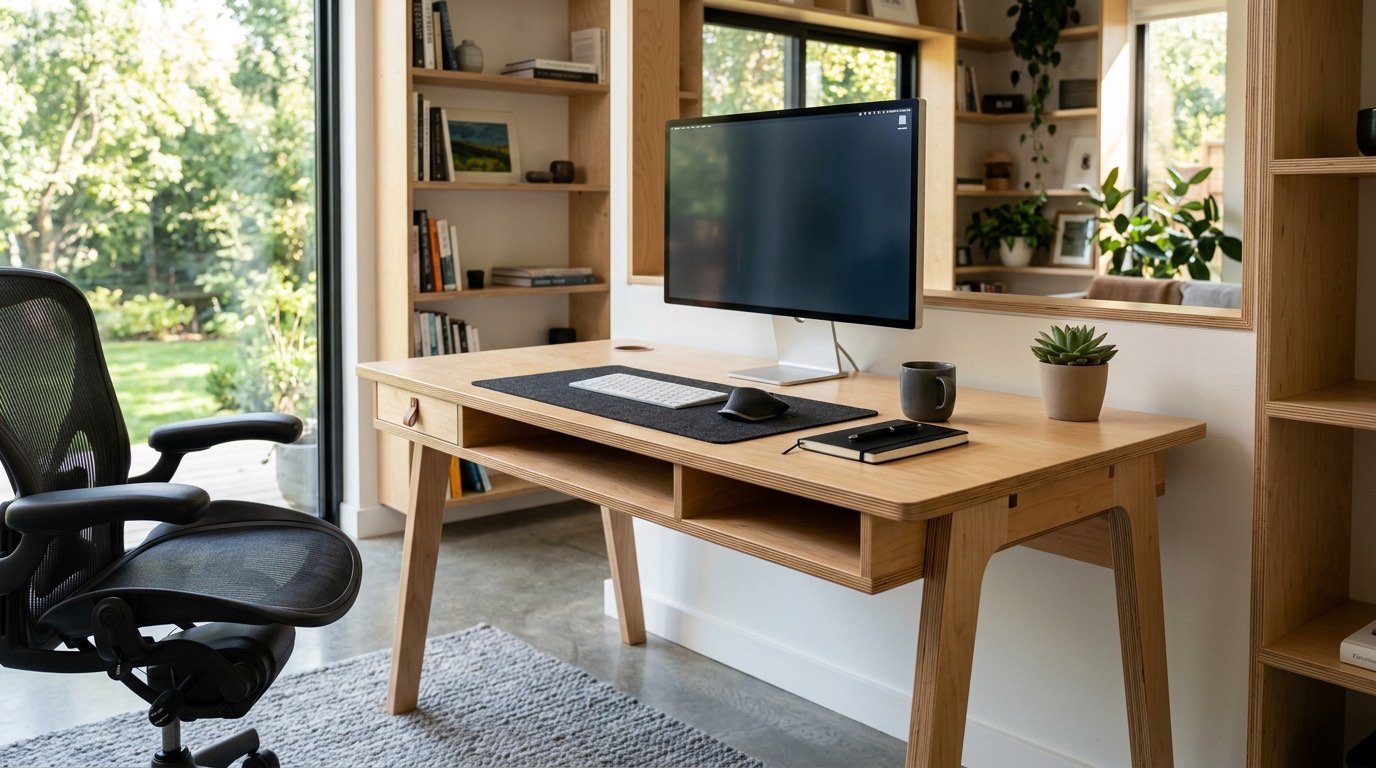
Different Names, the Same Design Decisions
"Computer table," "desk" and "office table" describe the same basic piece of furniture, and the design choices that matter are identical regardless of which term you use — available floor space, how much storage you need close at hand, and how you plan to manage cables and equipment.
Four Desk Designs
L-Shaped Corner Desks
Maximises work surface by using a room corner, giving separate zones for a computer setup and paperwork or a secondary monitor.
Straight Wall-Mounted Desks
A simple, space-efficient layout along one wall — the most flexible option for smaller rooms or shared home-office spaces.
Floating Minimalist Desks
Wall-mounted with no visible legs, giving a clean, uncluttered look and freeing floor space underneath for storage or easier cleaning.
Desks With Integrated Drawer Storage
Built-in drawers keep stationery, cables and documents close at hand without needing a separate storage unit alongside the desk.
Material Specifics
A standard desk usually works well at 18–19mm, but a large oval or rectangular conference table benefits from stepping up to 25mm, since it spans further and gets no support from a central leg. For grade and thickness recommendations for a desk surface, see our plywood for table top guide. If the desk is part of a larger office fit-out, our best plywood for office furniture guide covers matching material across desks and storage, and our office partition design ideas guide covers dividing the space around the desks.
Frequently Asked Questions
What's the difference between a computer table and an office desk?
Functionally, little to none — both terms describe the same type of furniture; design choices like L-shaped versus straight layouts and storage options apply equally to either name.
What plywood thickness is best for a desk top?
18–19mm gives a stable, flex-free work surface for a desk; see our plywood for table top guide for thickness recommendations by table type.
Is an L-shaped desk better than a straight desk?
It depends on the room — an L-shaped desk offers more surface area and works well in a corner, while a straight desk is more space-efficient in a smaller or narrower room.
How should I plan cable management for a plywood desk?
Built-in cable cut-outs or a rear cable tray, planned before the desk is built, keep cords organised and out of sight — mention this requirement when you're finalising the design.
Can a floating desk hold a heavy computer setup?
Yes, provided it's fixed into wall studs or a solid backing with brackets rated for the load — check the hardware specification if you're mounting a heavy monitor arm or multiple devices.
Need the Right Board for Your Project?
WhatsApp us your requirement and we'll recommend the right grade and thickness.