Laminate Guide · Special Laminates
Antibacterial Laminate
Antibacterial laminate slows the growth of bacteria on surfaces many hands touch. Here is how it works, what it does not do, where it is worth paying for, and what to ask before you buy.
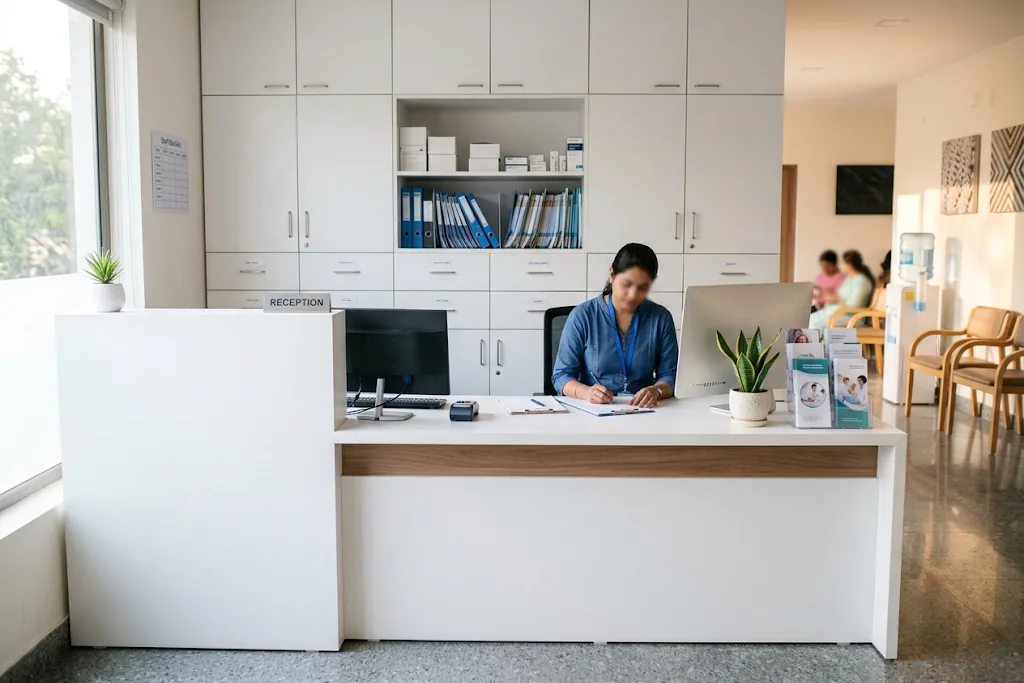
What Antibacterial Laminate Is
Antibacterial (antimicrobial) laminate is a decorative laminate with an antimicrobial additive, commonly silver-ion based, built into its top layer. Bacteria that land on the surface find it hard to multiply, so the sheet stays more hygienic between cleans. The additive is part of the laminate, not a coating, so it does not wipe off with normal cleaning.
It is worth being clear about what it does not do. It is not a disinfectant and it does not replace cleaning. Food spills, grease and dust still need wiping, and the claim covers bacteria on the surface, not the air in the room or the board underneath. What it gives you is an extra layer of hygiene on surfaces that many hands touch.
Where Antibacterial Laminate Is Worth It
High value
Clinics, hospitals and labs
Reception counters, consulting-room storage, nurse stations and lab furniture.
High value
Food outlets and pantries
Café counters, office pantries and food-prep storage (not cutting surfaces).
High value
Schools and play schools
Desks, cubbies and storage that children touch all day. School benches.
Good
Home kitchens
Shutters and storage near the cooking zone; pair with BWP plywood underneath.
Less needed
Wardrobes and living rooms
Low-touch areas where a standard laminate is enough.
Antibacterial vs Other Special Laminates
| Special grade | What it adds | Typical use |
|---|---|---|
| Antibacterial | Slows bacterial growth on the surface | Clinics, schools, food areas, kitchens |
| Anti-fingerprint | Super-matte surface that hides prints | Dark kitchen and wardrobe fronts |
| Fire retardant | Slows flame spread; certified grade | Offices, hotels, hospitals, public buildings |
| Post-forming | Bends round edges in one piece | Counters and rounded tops |
| Scratch-resistant (e.g. MR+/HS+) | Harder top layer | Base units, tables, counters |
Some ranges combine features, such as antibacterial with anti-fingerprint. All grades are explained in types of laminates.
Buying Antibacterial Laminate: What to Ask
Ask for the test report. Antibacterial activity on non-porous surfaces is commonly tested to ISO 22196; a genuine product will name the test and the result. Check it is in the top layer, built into the laminate, not a spray applied later. Ask how it should be cleaned: mild soapy water is usually recommended, and harsh abrasives can damage any laminate surface. Look for the brand and grade on the invoice so specifications can be verified for a clinic or institutional project.
Cleaning and care
Wipe with a soft cloth and mild detergent or a surface disinfectant suitable for laminates; avoid scrubbers, acetone and thinner. Clean spills promptly, because the antibacterial effect doesn't remove dirt and grease. Seal every edge with edge band so moisture and dirt can't get into the board. More: how to maintain a clean kitchen.
Antibacterial laminate in Ahmedabad
Availability and shades vary by brand. WhatsApp us the use (clinic, school, kitchen), shade and quantity and we will share antibacterial options and rates alongside standard grades. Standard laminate rates are on our laminate price list; brands are compared in best laminate brands in India.
Frequently Asked Questions
What is antibacterial laminate?
A decorative laminate with an antimicrobial additive, commonly silver-ion based, built into its top layer to slow the growth of bacteria on the surface.
Does antibacterial laminate replace cleaning?
No. It is not a disinfectant. It slows bacterial growth between cleans, but spills, grease and dust still need regular wiping.
Where should antibacterial laminate be used?
Clinics, hospitals, labs, schools, food outlets and pantries, and frequently touched home surfaces such as kitchen shutters and bathroom vanities.
How do I know an antibacterial claim is genuine?
Ask for the test report. Antibacterial activity on non-porous surfaces is commonly tested to ISO 22196, and a genuine product will name the test and result.
Does the antibacterial effect wear off?
When the additive is built into the laminate's top layer it does not wipe off with normal cleaning. Abrasive cleaners can damage any laminate surface, so avoid them.
Fitting Out a Clinic, School or Kitchen?
Tell us the use, shade and quantity. We will share antibacterial options and rates.