Comparisons · Pest Resistance Grade
Termite-Proof Plywood vs Normal Plywood: Key Differences
Termite-proof plywood is chemically treated during manufacturing to repel wood-boring insects — a different protection layer from the moisture grading most buyers focus on first.
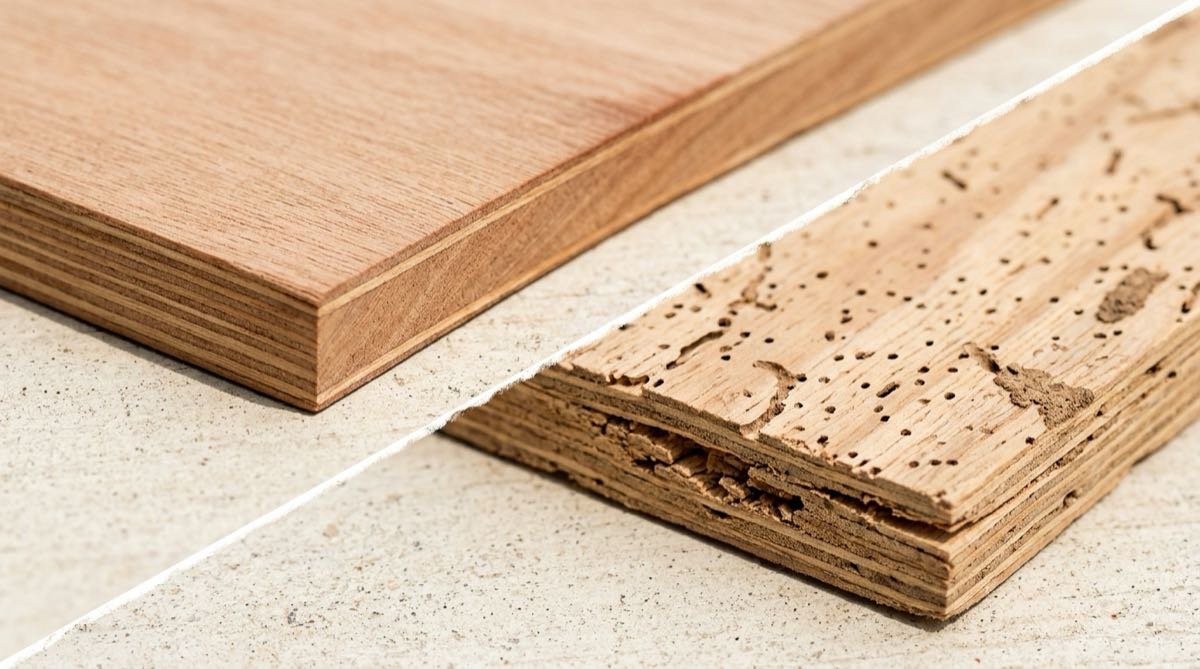
| Aspect | Normal Plywood | Termite-Proof Plywood |
|---|---|---|
| Treatment | None for pests | Chemically treated core and veneers against termites and borers |
| Vulnerability | Can be attacked by termites over time, especially in ground-contact or humid settings | Resists termite and borer attack |
| Typical cost | Baseline | Modest premium for the treatment |
| Best use | Areas with low pest risk | Ground-floor rooms, humid regions, high termite-activity areas |
| Combines with | Any moisture grade | Often paired with MR/BWR for full protection |
Termite Resistance and Moisture Resistance Aren't the Same Thing
A board can, and often should, have both.
Different Risk, Different Treatment
Moisture grading (MR/BWR/BWP) protects against water damage; termite treatment separately protects against insect attack — one doesn't guarantee the other.
Worth It in Gujarat's Climate
Warm, humid stretches of the year raise termite activity, making treated plywood a sensible upgrade for ground-floor rooms and older buildings in Ahmedabad.
Ask for Both Certifications
If both risks apply to your project, ask specifically for a sheet that's both termite-treated and rated to the moisture grade (MR/BWR/BWP) you need.
Not Every Room Needs It
Upper floors and rooms with no history of pest activity may not need the extra treatment — it's most valuable where ground contact or past infestation is a concern.
Combining Protections
Like fire-retardant treatment, termite resistance is a layer you can add on top of a chosen moisture grade rather than a replacement for it — see our fire-retardant plywood guide for another example of a treated grade, and our MR vs BWR vs BWP grade guide for the moisture side of the decision.
Frequently Asked Questions
How is termite-proof plywood made?
It's treated with chemical preservatives during manufacturing that make the wood fibres unpalatable or toxic to termites and other wood-boring insects, without significantly changing the board's other properties.
Is termite-proof plywood also waterproof?
Not automatically — termite resistance and moisture resistance are separate treatments, so if you need both, ask specifically for a sheet that combines termite treatment with an MR, BWR or BWP moisture grade.
Do I need termite-proof plywood on upper floors?
It's less critical away from ground contact, but termites can still travel through walls and structures, so it depends on your building's pest history and local termite activity.
How much more does termite-proof plywood cost?
It typically carries a modest premium over untreated plywood of the same grade, reflecting the extra chemical treatment step in manufacturing.
Can normal plywood be treated for termites after installation?
Surface termite treatments exist for installed furniture, but they're generally less thorough than factory treatment applied throughout the board during manufacturing — buying pre-treated plywood is the more reliable option.
Need the Right Board for Your Project?
WhatsApp us your requirement and we'll recommend the right grade and thickness.