Home Care Guide · Termites
Termite Prevention at Home: Signs, Prevention Tips, Treatment and Termite-Proof Materials
Termites work silently. By the time you see a hollow door frame or a crumbling wardrobe base, the colony has usually been feeding for months. The good news is that most termite damage is preventable: control moisture, keep wood off soil and damp walls, use treated or termite-proof materials, and inspect regularly. Here are the early signs to look for, twelve prevention steps, the treatment options, and termite-resistant materials with today's rates at our Lati Bazar store.

Signs of Termites in Your Home
1
Mud tubes
Thin brown tunnels on walls, corners, skirting or behind furniture, which termites use to travel from the soil.
2
Hollow-sounding wood
Tap door frames, skirting and wardrobe bases; damaged wood sounds hollow or gives way.
3
Wood dust or droppings
Fine powder or tiny pellets near frames and furniture.
4
Discarded wings
Small wings near windows and lights, especially after the first monsoon rains.
5
Bubbling paint, sticking doors
Blistered paint or laminate and doors that suddenly stick can mean damage inside.
If you see these signs, do not break open the mud tubes or spray randomly; call a licensed pest control service first, then repair or replace the damaged wood.
12 Ways to Prevent Termites at Home
1
Fix leaks and damp
Termites need moisture; repair leaking pipes, sinks and seepage walls first.
2
Pre-construction soil treatment
For new homes, anti-termite soil treatment before the floor is laid is the best long-term defence.
3
Use treated plywood
Branded plywood is treated against termites and borers; unbranded sheets often are not.
4
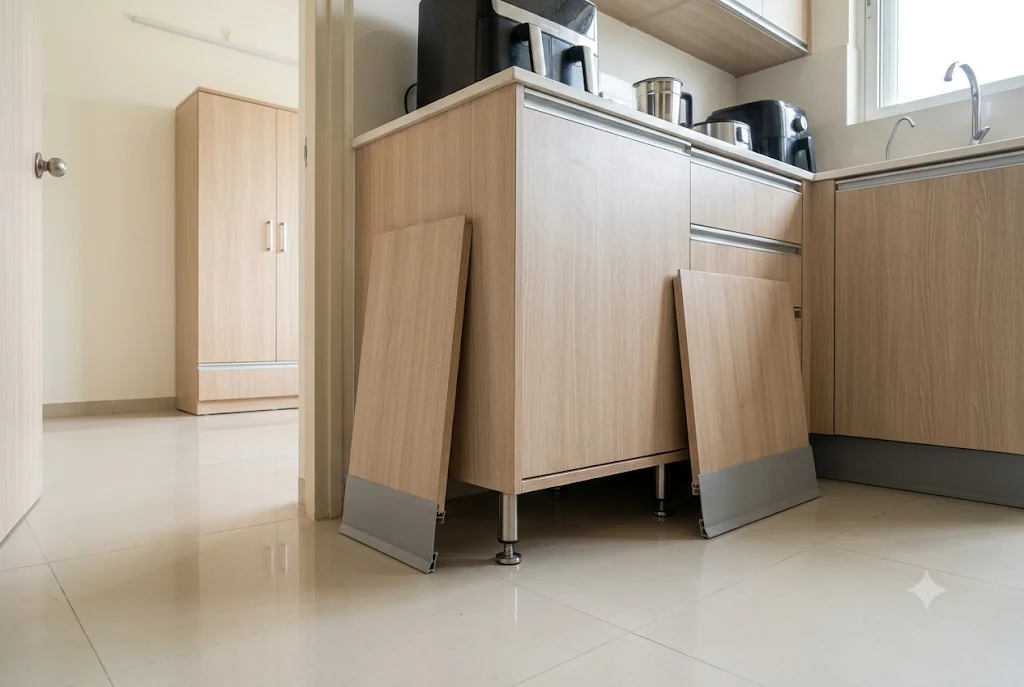
Keep wood off the floor
Legs or a plinth under wardrobes and cabinets, so mopping water and termites cannot reach the base.
5
Leave a gap from walls
A small gap behind furniture on outer or damp walls lets air flow and makes mud tubes visible.
6
Seal cracks
Fill cracks in floors, walls and around pipes where termites enter.
7
Seal all board edges
Edge band and laminate or polish every face of plywood furniture.
8
Waterproof frames
Use WPC door frames on ground floors and in bathrooms, where wooden frames rot and attract termites.
9
No wood touching soil
Keep planters, firewood and wooden garden furniture away from the house walls.
10
Ventilate
Air out closed stores, lofts and under-stair cupboards, especially in the monsoon.
11
Clear clutter
Old cardboard, newspapers and wood scraps in stores are termite food.
12
Inspect every year
Check frames, skirting and cupboard bases before and after the monsoon.
Termite Treatment Options
| Treatment | How it works | When to use |
|---|---|---|
| Pre-construction soil treatment | Termiticide applied to the soil before flooring | New homes and extensions |
| Post-construction drill-fill-seal | Holes drilled along walls and floors, filled with termiticide and sealed | Existing homes with active termites |
| Bait systems | Baits that termites carry back to destroy the colony | Recurring infestations |
| Spot treatment of furniture | Injection or spray into affected wood | Small, local damage |
| Replace damaged boards | Remove and rebuild in treated or termite-proof material | After the colony is treated |
Chemical treatments should be done by a licensed pest control professional. Rebuilding after damage is where the right material matters most.
Termite-Resistant Materials and Prices
At our Lati Bazar store, GST extra.
Swipe the table sideways to see all columns →
| Material | Price | Best for |
|---|---|---|
| Branded MR plywood (termite and borer treated) | ₹74 / sq ft (18 mm) | Dry-room furniture |
| Marine BWP plywood (treated) | ₹110 / sq ft (18 mm) | Kitchens, bathrooms, ground floors |
| Flexibond PVC board | ₹105 / sq ft (18 mm Gold) | Wet, termite-prone areas; no wood at all |
| Flexibond WPC board | ₹146 / sq ft (18 mm) | Wet areas, balconies; immune to termites |
| WPC door frame (4″ × 2.5″) | ₹168 / running ft | Frames on ground floors and bathrooms |
Plywood guides: termite-proof vs normal plywood · termite-resistant plywood · is gurjan plywood termite-proof?. Wood-free options: PVC board vs plywood · WPC vs wood.
Where Termites Strike First
Door frames on the ground floor and in bathrooms, where wood meets a damp floor; kitchen sink cabinets with slow leaks; wardrobes on outer walls that get monsoon seepage; under-stair and store cupboards with little air; and skirting and wall panelling. Use BWP plywood, WPC or PVC in these spots and keep them dry. See can plywood be waterproof and protecting plywood furniture in the rainy season.
Common Mistakes
Buying unbranded, untreated plywood to save money; wardrobes built directly on the floor against a damp wall; ignoring a small leak; spraying household insecticide on mud tubes (it scatters the colony); and repairing damaged furniture before the colony is treated. Treat first, then rebuild in the right material.
Samta Plywood Centre at Lati Bazar, near Gita Mandir, stocks termite- and borer-treated CenturyPly and Greenply plywood, marine BWP plywood, and Flexibond PVC and WPC boards, doors and frames. WhatsApp us what you are rebuilding for termite-resistant options with delivery across Ahmedabad.
Frequently Asked Questions
How do I know if I have termites at home?
Look for mud tubes on walls, hollow-sounding wood in frames and skirting, fine wood dust or droppings, discarded wings after rain, and bubbling paint or doors that suddenly stick.
How can I prevent termites at home?
Fix leaks and damp, keep furniture on legs and slightly away from walls, seal cracks, use treated plywood with sealed edges, use WPC frames in wet areas, and inspect before and after the monsoon.
Which plywood is termite-proof?
Branded plywood treated against termites and borers, such as CenturyPly and Greenply ranges. For zero risk, PVC and WPC boards contain no wood that termites can eat.
Are PVC and WPC boards termite-proof?
Yes. PVC board contains no wood, and WPC is a wood-polymer composite that termites do not attack. Both are also waterproof.
What is the best termite treatment for an existing home?
Post-construction drill-fill-seal treatment by a licensed pest control service, sometimes combined with bait systems for recurring problems.
Can termite-damaged furniture be repaired?
Small damage can be treated and patched. Badly damaged parts should be replaced with treated plywood, PVC or WPC after the colony has been treated.
Why do termites attack door frames first?
Frames touch the floor and walls, often stay damp, and give termites a direct path from the soil. WPC frames avoid the problem.
Rebuilding After Termites?
WhatsApp us what you are rebuilding for termite-resistant material options.