Veneer Guide · Thickness
Veneer Thickness: Sizes, Types and How to Choose
“Veneer thickness” causes confusion at the counter, because the word covers three different products: the thin face veneer itself, thicker sawn veneer for tabletops and flooring, and ready veneer sheets already pressed onto thin plywood. Each is chosen for a different job. Here is what each thickness means in millimetres, where it works, and how to pick the right one for your project.
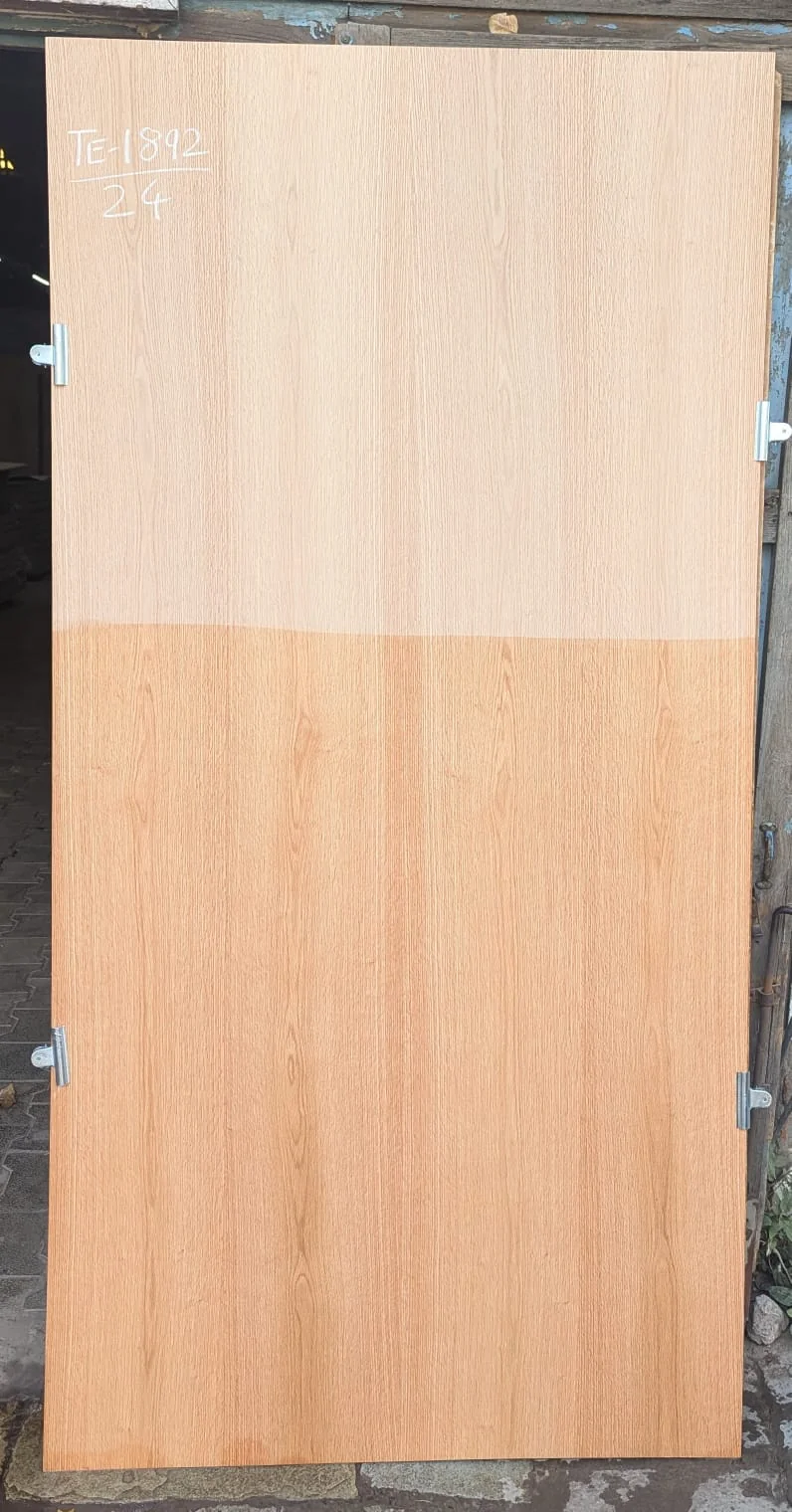
A 4 mm decorative veneer sheet at our Ahmedabad store, half raw and half polished. One 8 × 4 ft sheet covers a full door or wardrobe panel once pasted on plywood.
Veneer Thickness Types Explained
Typical market ranges; always confirm the exact thickness with the seller.
| Type | Typical thickness | What it is | Best for |
|---|---|---|---|
| Decorative veneer sheet | 4 mm | Face veneer already pressed onto thin plywood, ready to paste or fix | Wall panelling, ceilings, door skins, quick site work |
| Face veneer leaf (wood layer only) | Under 1 mm | A thin slice of real wood, often supplied loose or on a paper or fleece backing | Pasting on plywood or MDF for doors, wardrobes, panelling |
| Thick-cut veneer | About 1–3 mm | A thicker slice or sawn layer with more wood to sand | Table tops, counters and surfaces that may be refinished |
| Thick wear layer (flooring) | 2 mm and above | A sawn wood layer on an engineered base | Engineered wood flooring and heavy-traffic surfaces |
Choosing the Right Veneer Thickness
Doors and shutters
Face veneer on both faces
Thin veneer is enough on a flush door or plywood shutter, as long as both faces are veneered and edges are sealed. See veneer door designs.
Wall and ceiling panelling
Veneer sheet (4 mm)
Pre-pressed sheets go up faster on battens or over plywood, with fewer site steps.
Table and counter tops
Thick-cut veneer
More wood to sand means the top can be refinished after years of use.
Curved and rounded parts
Thin face veneer
Bends around curves and edges that thicker layers cannot follow.
Heavy-traffic surfaces
Thick layer or laminate
For reception counters and kids' furniture, a thicker layer or a laminate lasts longer. See veneer vs laminate (see also veneer vs plywood).
Feature walls
Face veneer, book-matched
Thin leaves from one bundle, pasted in sequence, give the best mirror-matched grain.
Why Thin Veneer Is Not a Weakness
Veneer gets its strength from the board underneath. A thin face veneer on good plywood or MDF is stable, light and uses far less timber than solid wood. What matters more than thickness is the core (calibrated MR plywood for dry rooms, BWP for damp ones), the adhesive and pressing, veneering both faces so panels stay flat, and a good polish. See veneer plywood guide and calibrated plywood.
Sanding: Where Thickness Matters
Thin face veneer allows a light sanding before polishing and a careful re-polish later, but aggressive sanding can cut through to the glue line. Ask your polisher to use fine grits on veneer. If you expect to sand a surface back more than once, such as a dining table top, choose a thicker layer.
Sheet Sizes
Veneer and veneer sheets are most commonly supplied in 8 × 4 ft (2440 × 1220 mm) sheets, which cover doors and large panels without joints. Loose face veneer comes in leaves whose width depends on the log; plan joints in the design. For board sizes, see the plywood sizes and thickness chart.
Choosing the Species
Thickness decides where veneer can go; species decides how it looks. Compare teak vs walnut veneer, natural veneer vs teak veneer and natural vs engineered veneer.
Our decorative veneer sheets are 4 mm thick. See them at Samta Plywood Centre, Lati Bazar, near Gita Mandir. Tell us where the veneer will go and we will suggest the right type and thickness. Veneer rates vary by species and grade; WhatsApp us for today's rate.
Frequently Asked Questions
What is the standard thickness of veneer?
Decorative veneer sheets sold in shops are 4 mm thick: a thin face of real or engineered wood pressed onto a plywood backing. The wood face on its own is well under 1 mm.
Which veneer thickness is best for furniture?
Face veneer on good plywood or MDF is standard for wardrobes, doors and panelling. Use a thicker layer for table and counter tops that may need refinishing.
Is thin veneer durable?
Yes, when pasted on a stable core, veneered on both faces, edge-sealed and properly polished. The board underneath provides the strength.
What size are veneer sheets?
Veneer sheets are most commonly 8 x 4 ft (2440 x 1220 mm). Loose face veneer leaves vary in width with the log.
Can veneer be sanded?
Yes, lightly. Thin face veneer can be sanded before polishing and re-polished later, but heavy sanding can cut through. Thicker veneer allows more refinishing.
What is the difference between veneer and veneer ply?
Veneer is the thin wood slice itself. Veneer ply or a veneer sheet is that slice already pressed onto a thin plywood base, ready to fix.
Which veneer thickness is used for doors?
Face veneer on both faces of a flush door is standard. Pre-pressed veneer skins are also used for faster site work.
Need Help Choosing Veneer?
Tell us where the veneer will go and we will suggest the right type, thickness and species.