Veneer Guide · Teak vs Walnut
Teak Veneer vs American Walnut Veneer: Which Should You Choose?
Teak and American walnut are the two most requested veneers for premium Indian interiors. Teak brings a warm, golden, classic look; walnut brings deep chocolate tones and dramatic grain for a modern, luxurious feel. Both are real wood, both polish beautifully, and both need a good core. Here is how they compare, where each shines, and how to combine them.
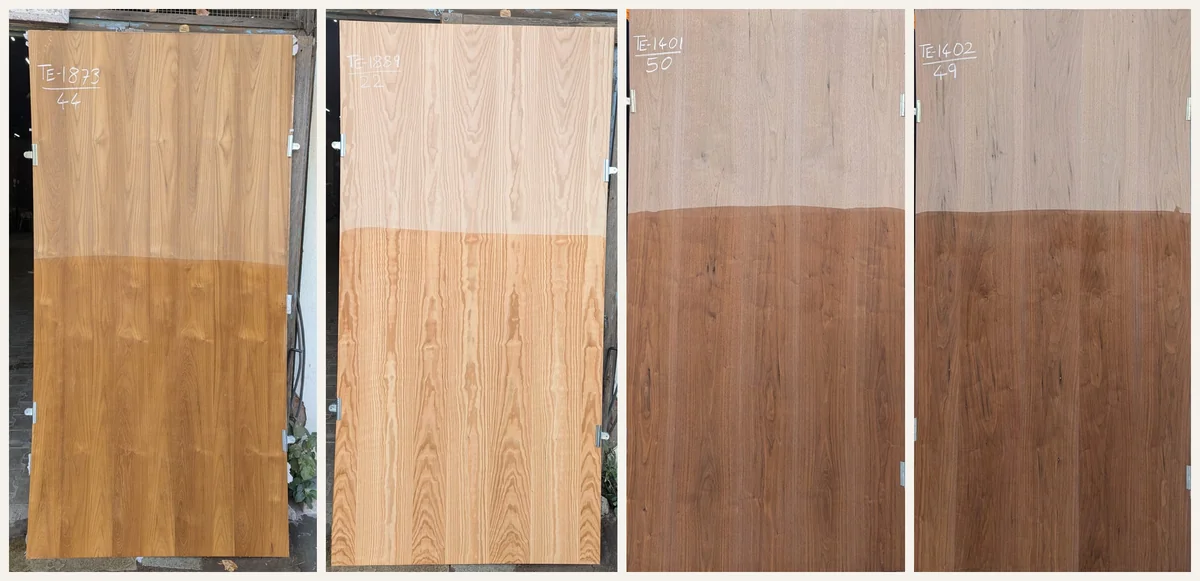
Teak (left) and walnut (right) veneer designs at our Ahmedabad store, each sheet half raw and half polished so you can compare the finished colours.
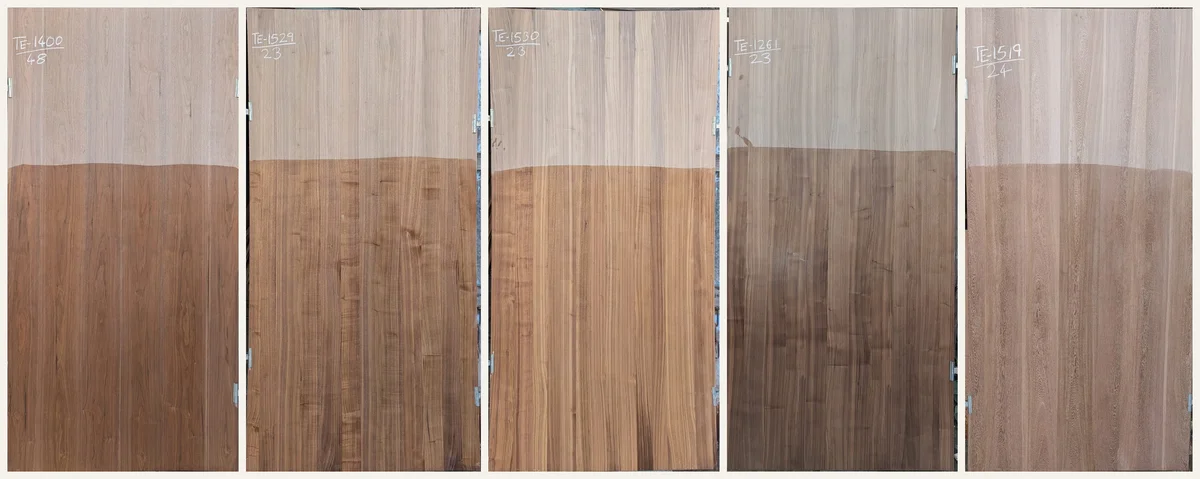
More walnut-tone veneer designs at our Ahmedabad store, from light walnut to deep brown, each half raw and half polished.
Teak veneer
Golden to honey-brown, straight to gently wavy grain and a soft natural sheen. It suits classic and warm modern interiors, matches easily across many panels and deepens beautifully with age.
American walnut veneer
Also called black walnut. Deep chocolate browns with lighter streaks and wavy or curly figure. It pairs strikingly with brass, black metal, glass and stone for contemporary luxury.
Teak vs Walnut Veneer Compared
| Factor | Teak veneer | Walnut veneer |
|---|---|---|
| Colour | Golden, honey brown | Dark chocolate with lighter streaks |
| Grain | Straight to gently wavy | Wavy, curly, more figure |
| Mood | Warm, classic, welcoming | Bold, modern, luxurious |
| Ageing | Deepens to a richer gold | Can lighten slightly in strong sun |
| Matching many panels | Easier; consistent tone | Needs careful bundle matching |
| Room feel | Keeps rooms bright and airy | Makes large rooms cosy; can darken small ones |
| Pairs with | White, cream, green, brass | Black metal, brass, grey stone, glass |
| Price | Premium | Usually higher (imported) |
Best Uses for Teak and Walnut Veneer
Full-height wardrobe
Teak
Consistent grain across many shutters keeps the wall calm.
Study, office cabin
Walnut
Executive, grounded look for desks and panelling.
Dining and living
Either
Teak for bright, family spaces; walnut for formal, moody ones.
Combining Teak and Walnut
You do not have to choose one for the whole home. A popular approach is teak for doors and wardrobes (where many panels must match) and walnut for one feature wall or statement piece in the living room or master bedroom. Keep one as the main wood and the other as the accent so they do not compete.
Veneer or Solid Teak and Walnut?
Solid teak is sold by the cubic foot for doors, frames and carved furniture, and solid American walnut is rarely used in Indian homes because of its cost. Veneer gives you the same grain on a stable plywood or MDF core, in wide 8 × 4 ft panels, at a fraction of the price and without the seasonal movement of solid wood. For large surfaces such as wardrobes, panelling and doors, veneer is the practical way to use both woods; keep solid teak for frames, edges and heirloom pieces. Solid teak rates are on our timber price list, and the trade-offs are in engineered wood vs solid wood.
Finish and Care
Teak looks natural in matte PU or a light melamine; walnut glows in satin or gloss PU, which deepens its figure. For both, dust with a soft cloth, wipe spills at once, avoid harsh cleaners and keep them out of harsh direct sun. Re-polish every few years to refresh. Veneer both faces of doors and shutters so they stay flat.
Buying Tips
Buy all leaves for one area from the same bundle, check them in daylight, and paste on calibrated plywood or MDF. If you want the look for less, consider a teak or walnut woodgrain laminate, which needs no polish; see woodgrain laminates and veneer vs laminate. Walnut designs, polish and buying tips are in our walnut veneer guide. Other veneer choices are in natural veneer vs teak veneer and natural vs engineered veneer; thickness in veneer thickness.
See teak and walnut veneer at Samta Plywood Centre, Lati Bazar, near Gita Mandir. Veneer rates vary by grade and bundle, so WhatsApp us the room and look you want for today's rate.
Frequently Asked Questions
Which is better, teak or walnut veneer?
Neither is better overall. Teak suits warm, classic interiors and large matching areas such as wardrobes and main doors. Walnut suits modern, luxurious feature walls, studies and statement furniture.
Is walnut veneer more expensive than teak veneer?
Usually, yes. American walnut is imported and priced higher than most teak veneers. Rates vary by grade and bundle.
Does walnut veneer make a room dark?
Walnut is dark, so use it on one feature wall or piece in small rooms, with good lighting and lighter surroundings.
Which veneer is best for a main door?
Teak veneer on a 35 mm BWP flush door is the classic choice for Indian homes. Walnut suits a modern, dramatic entrance.
Can teak and walnut be used together?
Yes. Use one as the main wood, such as teak for doors and wardrobes, and the other as an accent, such as a walnut feature wall.
What finish is best for walnut veneer?
Satin or gloss PU brings out walnut's depth and figure. Matte PU gives a softer, modern look.
Does teak veneer darken over time?
Yes. Natural teak gradually deepens to a richer golden-brown with light and age.
Is walnut veneer real wood?
Yes. American walnut veneer is a thin slice of real walnut, pasted on plywood or MDF and polished. Walnut-look laminates are a printed, lower-cost alternative.
Teak or Walnut?
WhatsApp us the room and the look you want, and we will share teak and walnut veneer options.