Veneer Guide · Teak vs Other Veneers
Natural Veneer vs Teak Veneer: What Is the Difference?
Teak veneer is itself a natural veneer: a thin slice of real teak. When people compare “natural veneer vs teak veneer”, they usually mean teak against the other natural species (walnut, oak, ash and exotic woods), or real teak veneer against teak-look engineered veneer. Here is how they differ, where each works best, and how teak veneer relates to teak plywood and solid teak.
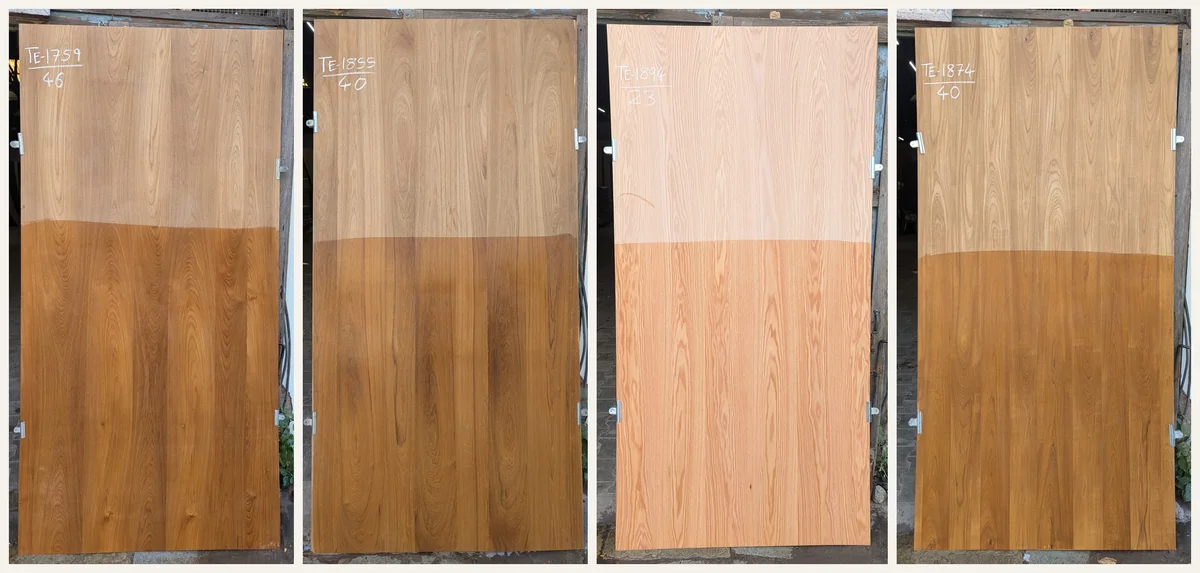
Teak (left) and oak (right) veneer designs at our Ahmedabad store, each sheet half raw and half polished to show how polish deepens the grain.
Natural veneers
Real wood slices from many species: walnut, oak, ash, maple, sapele, wenge and more. Each log has its own colour and figure, so every sheet is different. Great where individuality is the point.
Teak veneer
A natural veneer sliced from teak, prized in India for its golden-brown tone, straight to gently wavy grain and fairly consistent colour. That consistency makes it easy to match across many panels and doors.
Teak Veneer vs Other Natural Veneers
| Factor | Teak veneer | Other natural veneers |
|---|---|---|
| Colour | Golden to honey brown; deepens with age | From pale ash and oak to dark walnut and wenge |
| Grain | Straight to gently wavy, fairly consistent | Varies widely by species and log |
| Matching many panels | Easier | Needs sheets from one bundle |
| Style | Classic, warm, traditional to modern | From Scandinavian (oak, ash) to dramatic (walnut) |
| Best for | Main doors, full-height wardrobes, TV units, bed backs | Feature walls, accent furniture, statement doors |
Teak against walnut specifically is in teak vs walnut veneer (see also veneer vs solid wood).
Natural Teak Veneer vs Engineered Teak Veneer
| Factor | Natural teak veneer | Engineered (recon) teak veneer |
|---|---|---|
| Made from | Sliced teak log | Fast-growing wood, dyed and re-formed to look like teak |
| Grain | Natural variation, genuine figure | Uniform, repeatable pattern |
| Ageing | Deepens to a richer golden tone | Holds its original colour more evenly |
| Price | Higher | More affordable |
| Best for | Main doors, premium furniture | Large projects needing identical panels |
More in natural vs engineered veneer.
Teak Veneer vs Teak Plywood vs Solid Teak
These three are often confused at the counter. Teak veneer is a thin surface layer that must be pasted on plywood or MDF and polished. “Teak plywood” or “one-side teak ply” usually means plywood with a teak veneer face already pressed on, ready to cut and polish. Solid teak is timber, sold by the cubic foot for doors, frames and furniture; see our timber price list and sheesham vs teak vs sal.
Does Burma Teak Matter in Veneer Form?
For solid timber, Burma teak's oil and density make a real difference outdoors. For veneer, which is only a thin decorative layer on a stable board, the look of the leaves, the quality of the base panel and the finishing matter more than the teak's origin. Choose the sheets you like, from one bundle, on a good core.
Where Each Works Best
Teak veneer: main doors on 35 mm BWP flush cores, full-height wardrobes, TV units, bed-back panels and anywhere many panels must match. See veneer door designs and teak wood door designs. Other natural veneers: a walnut feature wall, an oak study, an ash dining console, or any single piece where varied grain adds character. See veneer sheets for interiors. To compare makers, see the best veneer brands.
Buying Tips
Buy every leaf for one area from the same bundle and keep them in sequence for matching. Paste on calibrated plywood or MDF, veneer both faces of doors and shutters, and seal every edge. Avoid veneer in constantly wet areas such as bathrooms and sink units, where laminate on BWP is the better choice; see veneer vs laminate. Finish with matte or gloss PU, or melamine on a budget.
See teak and other natural veneers at Samta Plywood Centre, Lati Bazar, near Gita Mandir. Veneer rates vary by species and grade, so WhatsApp us the look you want for today's rate.
Frequently Asked Questions
Is teak veneer a natural veneer?
Yes. Teak veneer is a natural veneer sliced from teak. "Natural veneer vs teak veneer" usually means teak compared with other natural species, or real teak compared with teak-look engineered veneer.
Which is better, teak veneer or other natural veneers?
Teak is better where many panels must match, such as wardrobes, TV units and main doors. Other natural species such as walnut or oak are better for feature walls and statement pieces where varied grain adds character.
Is teak veneer the same as teak plywood?
No. Teak veneer is a thin surface layer. "Teak plywood" usually means plywood with a teak veneer face already pressed on. Solid teak is timber.
Is Burma teak veneer better?
In veneer form, the look of the leaves, the base panel and the finishing matter more than the teak origin. Choose sheets you like from one bundle, on a good core.
What is the difference between natural teak and recon teak veneer?
Natural teak veneer is sliced from a teak log with genuine grain variation. Recon teak is made from other wood, dyed and re-formed to look like teak with a uniform pattern, and costs less.
Can teak veneer be used on wardrobes?
Yes. Teak veneer is one of the best choices for full-height wardrobes because its consistent grain matches easily across shutters.
Does teak veneer change colour?
Yes. Natural teak veneer gradually deepens to a richer golden-brown with light and age.
Choosing Veneer?
WhatsApp us the room and the look you want, and we will share teak and natural veneer options.