Veneer Guide · Natural vs Engineered
Natural vs Engineered Veneer: Which One Should You Choose?
Both are real wood, sliced thin and pasted on plywood. Natural veneer is sliced straight from one log, so every sheet has its own grain and colour. Engineered (reconstituted) veneer is sliced, dyed and re-pressed into a block, then sliced again for a uniform, repeatable pattern. Here is how they differ, which looks more premium where, and how to buy each.
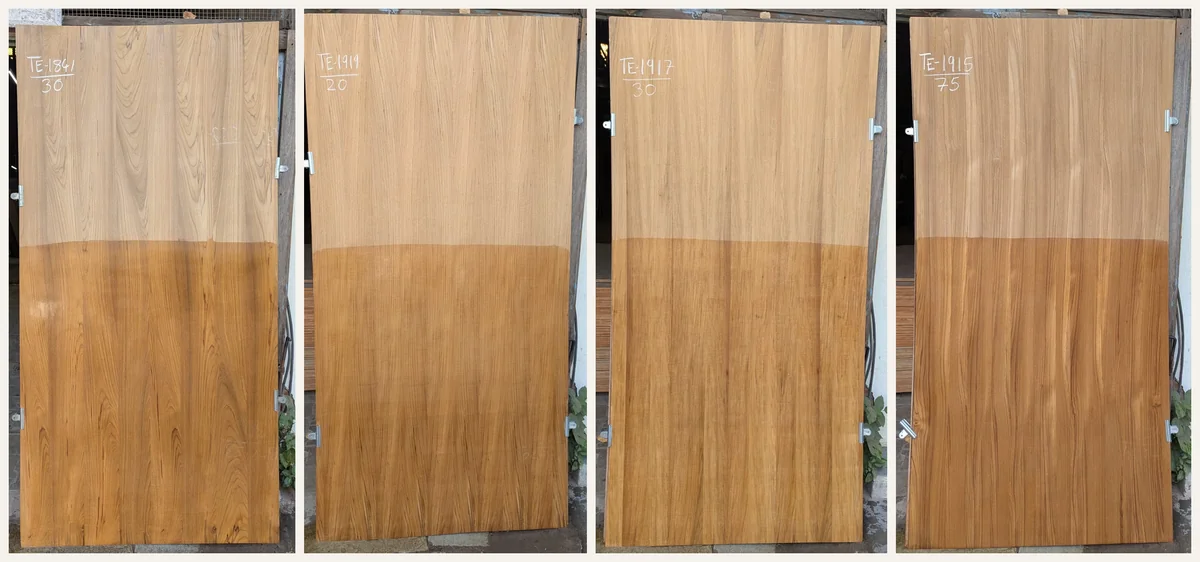
Engineered teak veneer designs at our Ahmedabad store, each sheet shown half raw and half polished so you can see how the finish changes its colour.
Natural veneer
A thin slice cut directly from a log of teak, walnut, oak, ash or an exotic species. Grain, knots and colour vary from sheet to sheet, which is its charm. Sheets from one log (a “bundle”) can be book-matched for mirror-image patterns.
Engineered (recon) veneer
Fast-growing wood is peeled, dyed, stacked and glued into a block, then sliced to create a consistent grain. It can imitate rare species or create designs that do not exist in nature, with the same look on every sheet.
Natural vs Engineered Veneer Compared
| Factor | Natural veneer | Engineered veneer |
|---|---|---|
| Grain | Unique on every sheet | Uniform, repeatable |
| Colour | Varies; ages and deepens with light | Controlled and consistent |
| Matching large areas | Needs sheets from one bundle | Easy: every sheet matches |
| Species and designs | Limited to what grows | Wide, including rare looks and patterns |
| Defects | Natural knots, mineral streaks | Few; clean and even |
| Sustainability | Depends on the source forest | Uses fast-growing plantation wood |
| Refinishing | Sand and re-polish | Sand and re-polish (take care with dyed layers) |
| Price | Higher, especially exotic species | More affordable |
| Best for | Feature walls, statement doors, bespoke furniture | Wardrobes, large panelling, offices, hotels |
Which Veneer for Which Space
TV wall or bed-back wall
Natural, book-matched
The grain itself is the decoration. Walnut and teak are favourites. See plywood for headboards.
Full-height wardrobes
Engineered
Many shutters that must match perfectly across the room.
Office and hotel panelling
Engineered
Large areas, repeat orders and a consistent look floor after floor.
Dining and console tables
Natural
A single standout piece where variation reads as luxury.
Kitchens and bathrooms
Neither: use laminate
Water and steam are hard on any veneer. See veneer vs laminate (see also veneer vs plywood).
Which One Looks More Premium?
It depends on the space. Natural veneer looks more premium where individuality is the point: a single feature wall, a statement door or a bespoke table, where no two surfaces look alike. Engineered veneer looks more premium where consistency is the point: a wall of wardrobe shutters, a hotel corridor or an office, where a mismatched panel would look like a mistake. Many good interiors use both.
Buying Tips
Natural: buy all sheets for one area from the same bundle, check the leaf sequence numbers for book-matching, and look for cracks or patches. Engineered: note the design code and batch so you can reorder the same look, and check both faces for even colour. Both: paste on a good core (MR plywood for dry rooms, BWP where damp), balance the back of shutters with a backing veneer or laminate, and plan for sanding and polishing on site. More in veneer sheets for interiors and veneer plywood guide.
Finish and Care
Both are finished with melamine, PU or lacquer after fitting. Matte PU is the most popular for modern homes. Dust with a soft cloth, wipe spills at once, keep out of harsh direct sun and re-polish every few years. See also advantages of veneer sheets, natural veneer vs teak veneer, teak vs walnut veneer, walnut veneer and veneer thickness (see also types of veneer).
Visit Samta Plywood Centre at Lati Bazar, near Gita Mandir, to see natural and engineered veneer side by side. Veneer rates vary by species and design, so WhatsApp us the look you want for today's rate, with delivery across Ahmedabad.
Frequently Asked Questions
What is the difference between natural and engineered veneer?
Natural veneer is sliced straight from a log, so every sheet has unique grain and colour. Engineered (reconstituted) veneer is made by dyeing and re-pressing sliced wood into a block and slicing it again, giving a uniform, repeatable pattern.
Which is better, natural or engineered veneer?
Natural veneer is better for feature walls, statement doors and bespoke furniture where unique grain matters. Engineered veneer is better for large areas such as wardrobes and office panelling where every sheet must match.
Is engineered veneer real wood?
Yes. It is made from real wood, usually fast-growing plantation species, that is sliced, dyed and re-formed to create a consistent grain.
Is engineered veneer cheaper than natural veneer?
Usually, yes. Natural veneer costs more, especially for exotic species and book-matched bundles. Rates vary by design, so ask for the specific code.
Can engineered veneer be polished?
Yes. Both natural and engineered veneer are sanded and polished after fitting and can be re-polished later. Sand engineered veneer carefully so the dyed layers stay even.
Which veneer is best for a wardrobe?
Engineered veneer suits full-height wardrobes because every shutter matches. Use natural veneer for a single statement wardrobe where grain variation adds character.
Can veneer be used in a kitchen?
It is not recommended for kitchens or bathrooms, where water and steam damage the finish. Laminate on BWP plywood is the practical choice there.
Choosing Veneer?
WhatsApp us the room and the look you want, and we will share natural and engineered veneer options with rates.