Material Guide · Veneer vs Plywood
Veneer vs Plywood: What Is the Difference and Which Do You Need?
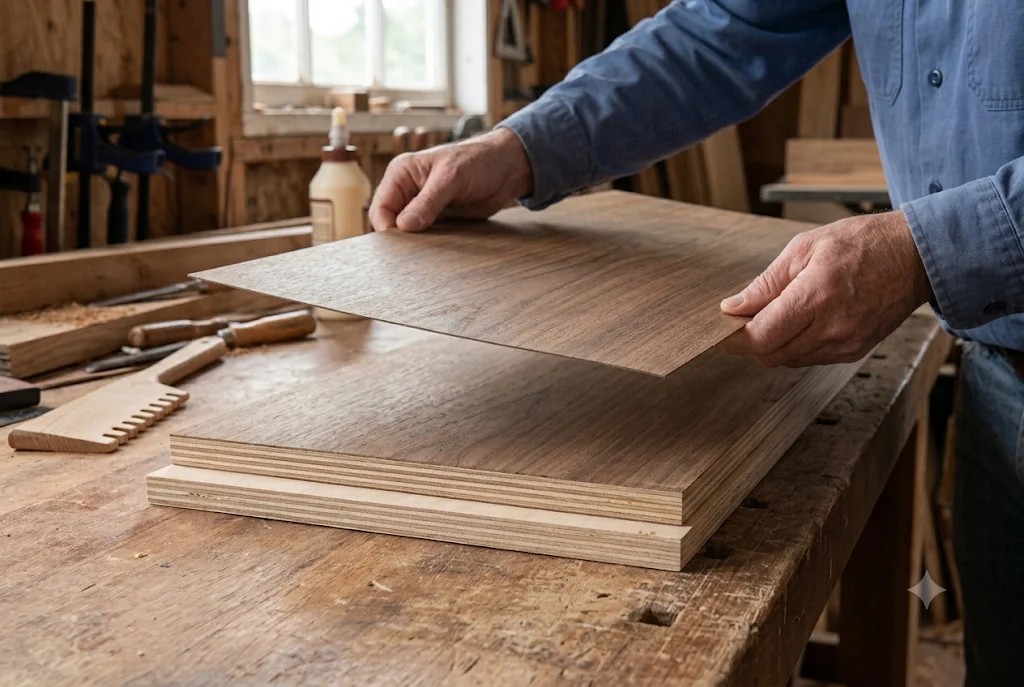
“Should I use veneer or plywood?” is one of the most common questions at our counter, and the honest answer is that they are not rivals. Plywood is the structural board your furniture is built from. Veneer is a thin sheet of real wood that is pasted on top to make that board look like solid timber. Most premium furniture uses both. Here is exactly how they differ, how they work together, and how to choose the right combination.
What is plywood?
A structural board made by gluing thin wood layers (plies) with their grain crossed at right angles. That cross-lamination makes it strong, stable and good at holding screws. It is the body of wardrobes, kitchens, beds and doors. Grades: MR for dry rooms, BWP for wet areas. See plywood.
What is veneer?
A thin decorative wood face, sold as 4 mm sheets with a plywood backing, sliced from a log of teak, walnut, oak or other species. It has no strength of its own; it is pasted onto plywood, MDF or a flush door to give a natural wood finish, then polished. See advantages of veneer sheets.
Veneer vs Plywood: Key Differences
| Factor | Veneer | Plywood |
|---|---|---|
| What it is | A decorative surface layer | A structural board |
| Thickness | 4 mm sheets | 4 mm to 25 mm |
| Strength | None on its own | High; carries loads and screws |
| Job | Looks: real wood grain and colour | Structure: carcass, shelves, doors |
| Needs | A base board, adhesive and polish | A surface finish: laminate, veneer or paint |
| Water | Only as good as its polish and base | MR resists humidity; BWP is waterproof |
| Sold as | Sheets, usually 8 × 4 ft | Sheets, 8 × 4 ft and other sizes |
Every plywood sheet also has a thin “face veneer” on its outer layers, usually gurjan or a similar hardwood. That is a structural ply, not the decorative veneer you polish. Sizes and thickness: veneer thickness guide · plywood sizes and thickness.
Veneer on Plywood: The Premium Combination
Step 1
Build in plywood
MR plywood for dry rooms, BWP for kitchens and bathrooms.
Step 2
Paste the veneer
Pressed on with a suitable adhesive, grain matched across doors.
Step 3
Balance the back
A veneer or laminate on the back face stops the panel bowing.
Step 4
Polish
PU, melamine or lacquer polish protects the wood and brings out the grain.
Veneer can also go on MDF (for curved or painted-edge designs) and on flush doors. See veneer plywood explained and veneer door designs.
Plain Plywood, Laminated Plywood or Veneered Plywood?
| Finish on plywood | Look | Care | Best for |
|---|---|---|---|
| Laminate | Printed woodgrain, colours, textures | Easiest; scratch and stain resistant | Kitchens, kids' rooms, offices, daily-use wardrobes |
| Veneer | Real wood; every sheet unique | Polish; avoid water and direct sun | Living rooms, main doors, master bedrooms, headboards |
| Paint or PU | Solid colour | Can chip | Better on MDF or HDHMR than plywood |
| Plain (unfinished) | Raw ply | Needs sealing | Hidden parts, carcass insides |
The full finish comparison is in veneer vs laminate.
How to Choose the Right Veneer
Species: teak for a warm golden-brown classic look, walnut for dark luxury, oak or ash for light modern rooms. See teak vs walnut veneer and natural vs teak veneer. Natural or engineered: natural veneer has unique grain; engineered (recon) veneer is uniform and repeatable across a large project; see natural vs engineered veneer. Grain matching: ask for sheets from the same bundle so doors match. Finish: PU for durability, melamine for a budget polish.
How to Choose the Right Plywood Under It
Thickness: 18 mm for carcasses and shutters, 12 mm for shelves and panelling, 6–9 mm for backs; see plywood thickness for furniture (see also types of veneer). Grade: MR for bedrooms and living rooms, BWP for kitchens and anywhere near water. Surface: a calibrated, smooth-faced sheet gives a flatter veneer finish with fewer ripples. Brand: buy branded plywood; a beautiful veneer on a weak board still fails.
Common Mistakes
Asking for “veneer instead of plywood” (you need both); veneering only one face of a door or shutter; using veneer near the sink or in the bathroom without a strong polish; mixing veneer bundles on one wall; and skipping sealing on edges. For a no-maintenance finish, laminate is the practical alternative.
Samta Plywood Centre at Lati Bazar, near Gita Mandir, stocks CenturyPly and Greenply plywood and a range of natural and engineered veneers. WhatsApp us your furniture plan and we will suggest the right plywood and veneer, with veneer rates on request and delivery across Ahmedabad.
Frequently Asked Questions
What is the difference between veneer and plywood?
Plywood is a structural board made of layered wood plies, used to build furniture. Veneer is a thin decorative sheet of real wood, sold as 4 mm sheets, pasted on top of plywood or MDF to give a natural wood finish.
Which is better, veneer or plywood?
They do different jobs, so you usually need both: plywood for strength and veneer for the look. The real choice is which finish goes on the plywood: veneer, laminate or paint.
Is veneer stronger than plywood?
No. Veneer has no structural strength on its own. The strength comes from the plywood or board underneath.
Can veneer be used without plywood?
Veneer always needs a base. Besides plywood, it can be pasted on MDF, HDHMR, blockboard or flush doors.
Is veneer plywood good for kitchens?
Use BWP plywood as the base and keep veneer to areas away from the sink, sealed with a strong PU polish. Laminate is more practical for the sink and hob zone.
What thickness is veneer?
Decorative veneer sheets are 4 mm thick: a thin wood face pressed onto a plywood backing, sold in 8 x 4 ft sheets.
Which is cheaper, laminate or veneer on plywood?
Laminate is usually cheaper and needs no polish. Veneer costs more, plus polishing labour, but gives real wood grain.
Need Plywood and Veneer?
WhatsApp us your furniture plan for plywood and veneer suggestions with rates.